The Project: “Terra TV” Usability Test + Eye Tracking Study
Year: 2010
Client: Terra

Terra Networks, S.A. is a Spanish Internet multinational company with headquarters in Spain and offices in Brazil, Chile, Colombia, Mexico, the United States and Peru. Part of Telefónica Group (the former Spanish public telephone monopoly), Terra operates as a web portal or Internet access provider in the U.S., Spain, and 16 Latin American countries. Terra was publicly traded on Nasdaq under the symbol TRR and on the Spanish stock market under the symbol TRR.
Terra is the largest Latin American online media company, ranked the 31st most popular Internet destination in the world. Offering Entertainment, News and Sports to the 100 million people who visit its portals monthly, Terra was named by Fast Company in 2011 as one of the most innovative company in the music area, “for a multipronged, and profitable, music-focused content model “.
With 100 million unique visitors per month, Terra is present in 17 Latin American countries as well as in the USA. It has offices in cities such as São Paulo and Porto Alegre (BRA), Buenos Aires (ARG), Santiago (CHI), Lima (PER), Bogota (COL), Mexico DF (MEX), Miami and New York . Among Terra’s most successful products and channels are Sonora (music) and Terra TV (premium video content) and the Planet Earth annual music festival. Oficial website
UX Team:
- Joana Andrade – UX Leader / Fhios Brazil – UX Consultancy Agency
- Antônio Mozelli – UX Designer / Fhios Brazil – UX Consultancy Agency
The Usability study objective:
The study investigates the friendliness, communicability and ease of use of the TerraTV tool, which is evaluated in terms of navigation, content, functionality and layout.
Six individuals with distinct demographic profiles were invited to participate in the study. During the eye tracking investigation, participants were asked to locate specific content such as videos in distinct categories, search results, without, however, verbalizing their opinions.
In a second moment participants were asked to reflect on the pages they had visited during eye tracking and to verbalize their impressions and opinions on these pages.
The study aimed to explore the objectives below in the Terra TV’s website:
- Check participants’ reactions to the visual stimuli in the evaluated pages and verify their ability to identify titles, links, relevant information and contents, among others.
- Evaluate the Portal qualitatively with the end users, having as criteria:
- Navigation
- Ease of use and location
- Functionality
- Use of Interaction Devices – Features
- User Feedback
- Intuitiveness
- Memorization
- Graphic Design / Layout
- Accessibility
- Understand the ease / difficulty of finding content
- Understand navigation via Terra’s homepage and inside the Terra TV website section
- Understand areas of exploitation of Terra TV pages
The following research methodologies were used in this study:
- In-depth interview
- Observation of participants
- Verbal Protocol ‘Think aloud’ (participants are invited to verbalize their thoughts while interacting with the tools)
- Tasks performed during the study
- Eye Tracking analysis
- Reporting of interviews with participants
- Completion of questionnaires (expressions of preference)
- Participants were invited to complete the tasks and then evaluate the interfaces of the sites based on their experiences during the tests.
The Eye Tracking Analysis:
Eye tracking data was captured during all test tasks. The eye tracking data is displayed as:
- Heat maps
- Images with thermal graphics that illustrate the visual tendencies of most participants, eg demonstrates the standard behavior of the sum of the participants.
- Areas in red and orange represent areas of high visual attention.
- Useful for determining regions of interest and disinterest within the sample or group.
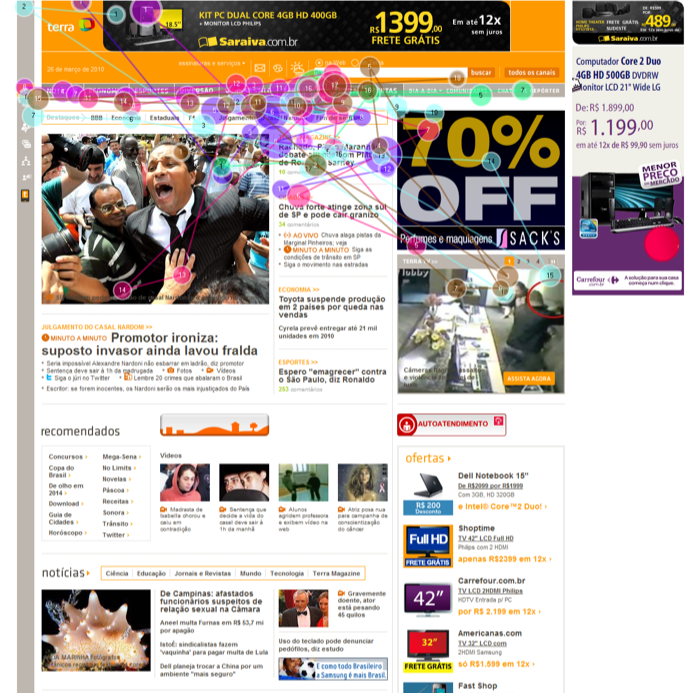
- Gaze plots
- Graphical processing of a sequence of data from the look of a single participant.
- Movements of the captured eye:
- Fixings or records (pause in the movements of the eyes to perceive the content). Humans perceive content through fixation.
- The data is useful for analyzing cognitive intent, interest, and emphasis on screen elements.
- AOI’s (Areas of Interest)
- Areas of Interest (AOI’s) can be scored on any stimulus.
- AOI’s can be used to quantify eye movement data. By relating eye movement data with certain objects on the screen, it is possible to obtain meaningful statistics of single or multiple recordings.
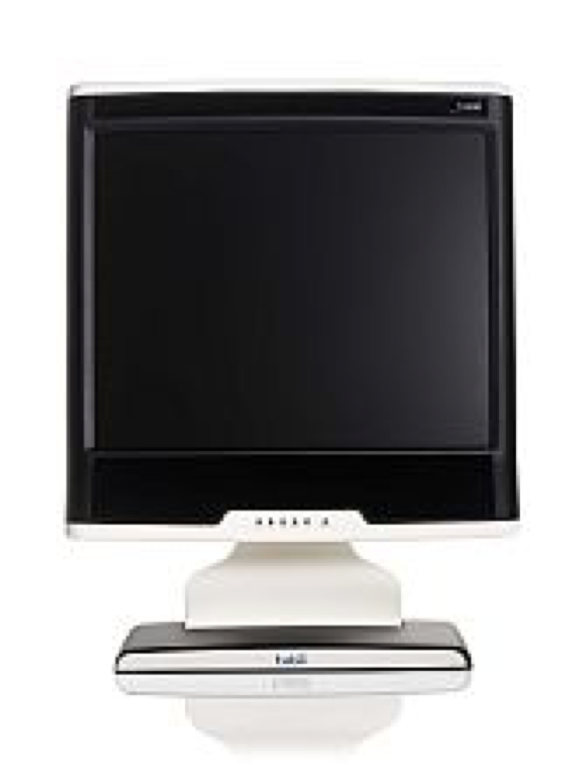
- During this study, we used the T120 Eyetracker equipment.
- The software used was the Tobii Studio 2.0.6.
- The study was conducted in the same system and used by all participants.
My duties on the project:
As a UX Designer, I performed the following tasks:
- Assistance in all user research processes
- Assistance in assembling and managing the usability lab facility
- Development of user questionnaires
- Eye Tracking analysis and data collection
- Observation of user tasks performed during the usability test
- Development of the final usability study report
Study results:
The results for this usability study are confidential and it is Terra’s property.
Usability test illustrations:
Gaze Plot Analysis 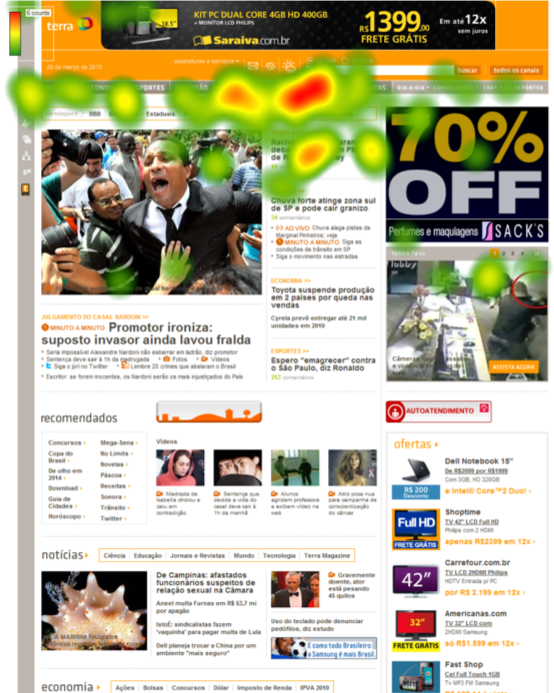
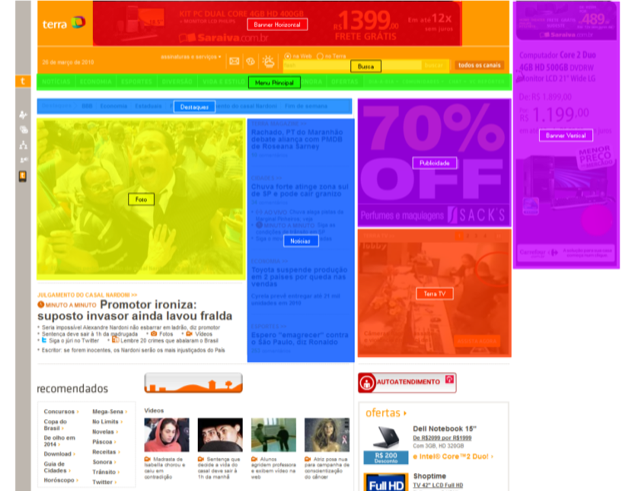
AOI Analysis 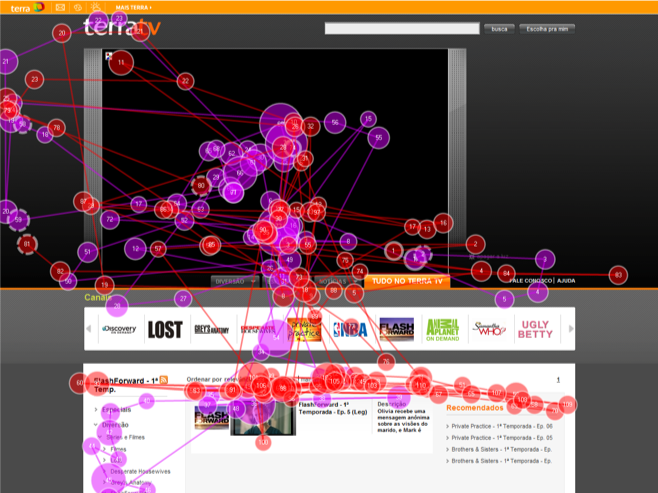
Gaze Plot Analysis 
Heat Map Analysis 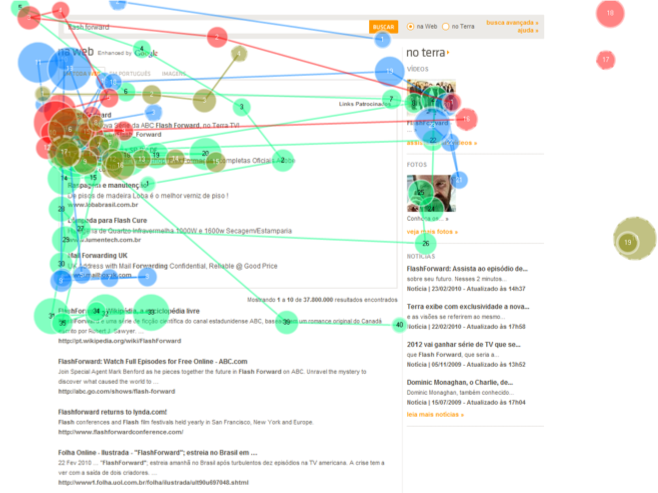
Gaze Plot Analysis 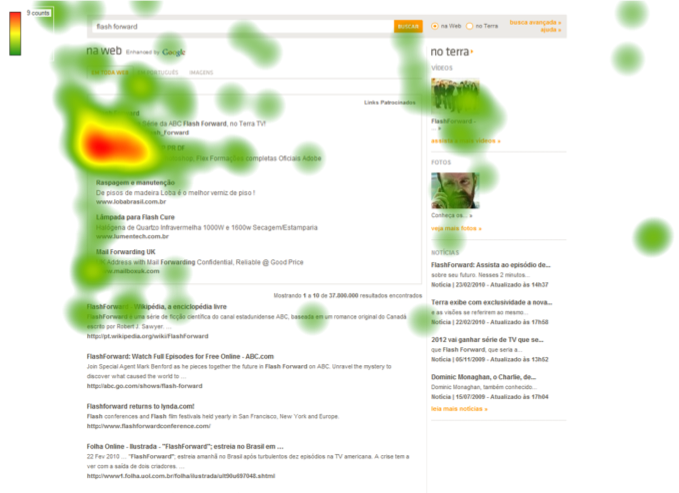
Heat Map Analysis 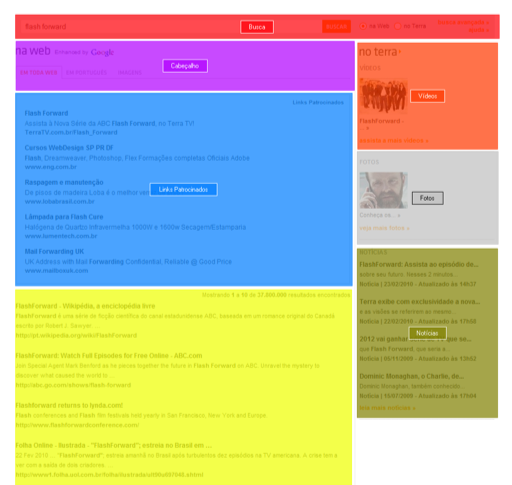
AOI Analysis
 a/m
a/m 